
Weekly Strategic Review | Issue #003 | 18 September 2026
Bolivia’s upstream opportunity set is getting broader — now the investment framework must catch up
This week did not produce a new certified giant discovery in Bolivia.
It produced something potentially more useful: evidence that the country’s upstream opportunity set may be broader than we have been assuming.
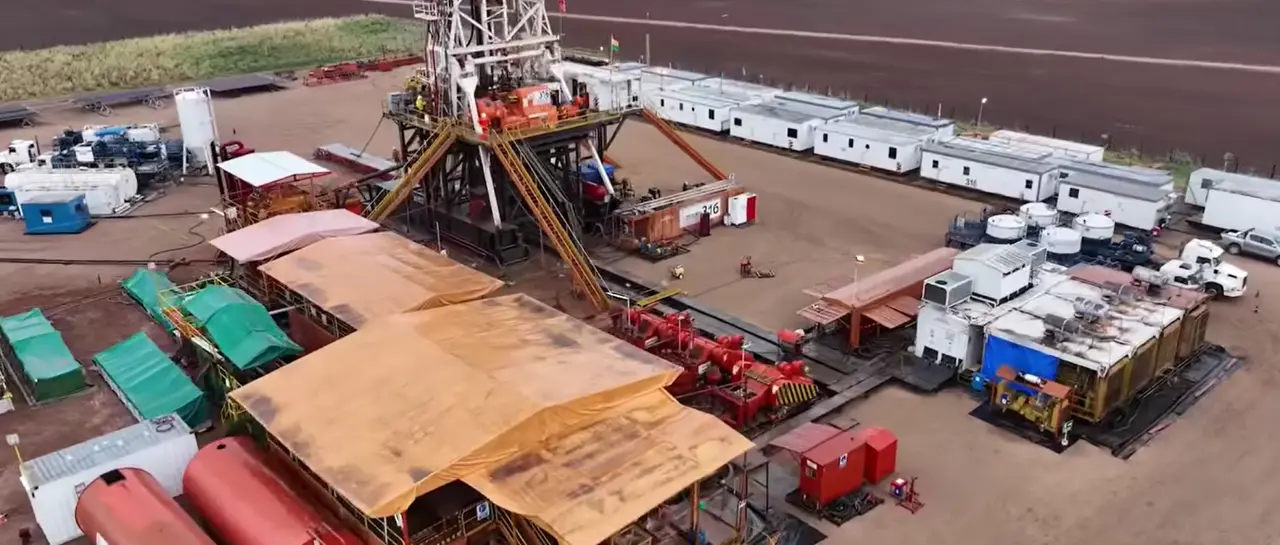
The completion and production-testing programme now underway at Montecristo-9 (MTC-9), in Okinawa, Santa Cruz, introduces another potential investment category alongside mature-field rehabilitation, conventional development and conventional exploration.
That matters because these opportunities have very different geological risks, capital requirements, development times and potential returns.
Bolivia therefore faces a question larger than Montecristo:
Can the country create an investment framework flexible enough to accommodate several different upstream business models at the same time?
That may become one of the defining questions for the next Hydrocarbon Law.
1. Montecristo-9 opens a potentially important new upstream lane
On 15 September, YPFB formally began the completion and production-testing phase of Montecristo-9 (MTC-9) at Okinawa, Santa Cruz.
The approximately US$12 million programme is designed to evaluate gas and condensate production from the Devonian Huamampampa and Los Monos formations using specialised stimulation technology.
YPFB describes these as low-permeability reservoirs.
The distinction between testing and commercial development is important.
Montecristo-9 is a pilot and production test. It is not a new certified reserves announcement.
Nevertheless, YPFB Chaco has put some potentially significant numbers around the wider opportunity.
General Manager Abel Villegas has described a conceptual development involving approximately 90 wells and investment of around US$1.6 billion, potentially producing approximately 110 MMcf/d of gas and 12,000 b/d of liquids at scale.
For MTC-9 itself, Chaco has discussed expected production of approximately 4.5 MMcf/d of gas and around 150 b/d of condensate, with three additional Okinawa wells contemplated for 2027.
Those numbers are potentially significant.
But they need to remain in the correct category:
development projections, not booked reserves and not yet demonstrated plateau production.
The next information that matters is therefore technical.
What are the stabilised rates?
What pressure behaviour is observed?
What does the decline curve look like?
What is the effective stimulated reservoir volume?
And ultimately, what EUR can reasonably be expected from a commercial well?
Until those questions begin to be answered, the US$1.6 billion development concept should be regarded as an opportunity case rather than a development plan.
Why it matters
Until now, much of the discussion around revitalising Bolivia’s upstream sector has fitted into three broad categories:
- mature and marginal field rehabilitation;
- conventional development and infill drilling;
- conventional exploration.
Montecristo potentially adds a fourth:
technology-led development of low-permeability resources that may previously have been technically or economically stranded.
That is strategically important.
Bolivia may possess hydrocarbon resources that are not geologically unknown, but which historically could not be developed economically with the available technology, costs or commercial framework.
The question is whether modern stimulation and completion technology can convert enough of that resource into repeatable economic production.
2. Technical progress is running ahead of the contractual system
One of the most revealing aspects of the Montecristo story is not geological.
It is institutional.
YPFB Chaco has indicated that follow-on drilling at Okinawa depends on approval of the petroleum-services contract for the area.
The relevant legislation, PL 343/2025-2026, would authorise YPFB to enter into a petroleum-services contract with YPFB Chaco for the Okinawa area.
As of 18 September, the Chamber of Deputies continued to list the proposal as a Proyecto de Ley en Tratamiento.
This highlights a problem that could become increasingly important as Bolivia attempts to accelerate upstream investment.
A technically attractive project is not necessarily an investable project.
International upstream capital evaluates at least three variables simultaneously:
risk + return + time.
Time matters because capital has an opportunity cost.
A project capable of producing an attractive return if approved today is not economically identical to the same project delayed twelve or eighteen months.
That applies whether the opportunity is a mature field, a conventional exploration prospect or a low-permeability development.
Why it matters
One of the most valuable reforms in a future Hydrocarbon Law may therefore receive considerably less political attention than royalties or taxes:
a predictable and materially shorter project and contract approval cycle.
Bolivia should eventually be able to measure the time required to move from:
commercial agreement → approval → investment decision → mobilisation → production.
That cycle time could become an important KPI for sector reform.
Reducing geological risk is difficult.
Reducing administrative delay is largely within Bolivia’s control.
3. Investor interest is appearing — but interest is not committed capital
YPFB Chaco says strategic partners and investment funds have expressed interest in the potential Okinawa development.
That is encouraging.
A project requiring approximately US$1.6 billion would almost certainly require significant external capital, technology and service capability.
But it is important to maintain a distinction that we have used throughout these Intelligence reports:
interest is not commitment.
There is not yet an announced farm-in, binding financing package, SPA, development sanction or committed US$1.6 billion investment programme.
What Montecristo does provide, however, is something Bolivia badly needs:
a specific project around which an investment conversation can take place.
Potential investors can now begin asking concrete questions.
What rights would an investor obtain?
How would production be remunerated?
What would YPFB Chaco’s role be?
How would royalties and IDH be treated?
What contractual and fiscal stability would apply?
Can capital and profits be repatriated?
What are the expected well costs?
What EUR is required to generate an acceptable return?
How quickly can development approvals be obtained?
And what environmental obligations would apply to hydraulic stimulation?
Those questions are much more useful than the generic statement that Bolivia needs foreign investment.
They move the discussion towards the question that ultimately matters:
Is this particular Bolivian petroleum project investable?
4. ANH reform suffered an institutional setback
The institutional reform agenda also encountered a setback this week.
Jorge Luis Gumucio submitted his resignation as interim Executive Director of the Agencia Nacional de Hidrocarburos after only twelve days in the position.
The stated reason was personal.
There is no evidence available to justify attributing the resignation to a policy disagreement or political dispute, and it would be inappropriate to infer one.
The significance lies elsewhere.
ANH is currently undergoing Government intervention intended to address deficiencies in regulation, supervision, control and oversight.
That makes continuity of technical leadership particularly important.
Bolivia is simultaneously attempting to:
- reform its hydrocarbons framework;
- accelerate investment;
- improve fuel-market controls;
- introduce new upstream technologies;
- attract international capital;
- and strengthen regulatory institutions.
This is precisely the moment when operators and investors need regulatory predictability.
The issue to watch is therefore not why one individual resigned.
It is whether ANH can rapidly establish stable technical leadership and a credible institutional structure for the next phase of sector reform.
5. Low-permeability development brings social licence into the investment equation
Montecristo has also introduced another issue that Bolivia will have to address if low-permeability development becomes an important part of the upstream strategy.
Hydraulic stimulation inevitably brings environmental and social questions.
Public discussion has already begun around “fracking”, unconventional hydrocarbons and comparisons with Argentina’s Vaca Muerta.
Some caution is required.
YPFB’s published description of MTC-9 is specific: the well is testing low-permeability Devonian Huamampampa and Los Monos formations using specialised stimulation technology.
More reservoir, completion and production information would be required before making simple technical comparisons with large-scale shale developments elsewhere.
But the broader environmental issue is real.
If Bolivia intends to develop low-permeability resources at scale, the regulatory framework will need to address transparently:
- water sourcing and consumption;
- fracture-treatment design;
- chemical disclosure;
- well integrity;
- flowback handling and disposal;
- groundwater protection;
- induced-seismicity monitoring;
- surface footprint;
- environmental liability;
- and long-term monitoring.
This is not merely an environmental debate.
For an international investor, environmental and social licence forms part of project economics.
Delays, litigation, community opposition or uncertain permitting all affect expected returns.
Bolivia therefore has an opportunity to establish the regulatory framework before development reaches significant scale rather than attempting to construct it afterwards.
What actually changed this week
This is the most important conclusion from the week.
Bolivia’s upstream opportunity set appears to be getting broader.
The country can increasingly think about upstream revitalisation as a portfolio rather than as a search for one transformational project.
Mature and marginal fields
Relatively modest capital requirements, shorter investment cycles and generally lower subsurface risk.
These opportunities may provide some of the fastest routes to incremental liquids and gas production.
Conventional development
Development and infill wells can exploit known accumulations, existing facilities and established infrastructure.
Conventional exploration
Higher geological risk and longer cycle times, but essential if Bolivia is to achieve meaningful long-term reserve replacement.
Low-permeability resources
Potentially scalable and strategically important, but more technology-intensive and likely to require different economics, service capability, environmental regulation and capital structures.
These four categories are not interchangeable.
And they should probably not all be governed by exactly the same commercial model.
Strategic implications
The central question for Bolivia may no longer be:
Where is the next big discovery?
A better question may be:
What portfolio of upstream investments gives Bolivia the fastest and most capital-efficient route to replacing production and reserves?
That distinction matters.
A US$5–15 million mature-field rehabilitation project should not have to compete for capital under exactly the same conditions as a US$100 million frontier exploration programme.
And neither should be evaluated like a potential 90-well, US$1.6 billion low-permeability development.
Different geological risk requires different returns.
Different capital intensity requires different commercial structures.
Different subsurface uncertainty may justify different fiscal treatment.
Different project maturity should permit different approval processes.
This suggests that the strongest possible new Hydrocarbon Law would do more than simply reduce the Government take.
It would create sufficient flexibility for several different petroleum business models to coexist.
That could include mature-field operators specialising in rehabilitation and production optimisation.
Larger international operators capable of funding conventional exploration.
Technology and service companies participating in low-permeability developments.
And financial investors prepared to provide risk capital where the contractual framework makes the risk-adjusted return competitive.
Montecristo therefore does not compete with the mature-field opportunity.
It demonstrates why Bolivia needs both.
Mature-field rehabilitation can provide shorter-cycle production and cash flow.
Conventional exploration provides the possibility of meaningful long-term reserve replacement.
Low-permeability development may eventually provide scale.
The strongest national strategy is not to choose between them. It is to build a portfolio containing all of them.
The constraint is becoming clearer
Bolivia may not be short of geological possibilities.
The more immediate constraint may be the system for converting those possibilities into investable projects.
That requires more than geology.
It requires:
- competitive economics;
- appropriate contracts;
- predictable regulation;
- reasonable approval times;
- access to capital;
- technical capability;
- and social licence.
If Bolivia can bring those elements together, the upstream industry could develop along several parallel tracks rather than depending upon a single discovery or investment thesis.
That would make the recovery considerably more resilient.
What to watch next
Montecristo-9 test results
Stabilised gas and condensate rates, pressure behaviour, decline indications and additional completion information will be far more important than headline development projections.
Okinawa / PL 343
Any movement in the legislative approval process matters because follow-on drilling and investment depend on establishing an executable contractual framework.
The proposed hydrocarbons reform
The critical question remains whether the eventual framework provides sufficient contractual and fiscal flexibility for fundamentally different types of upstream investment.
ANH leadership
A stable replacement and clarity over the regulator’s future institutional structure would strengthen confidence during a period of substantial sector change.
Surubí NO-6
The next meaningful milestone is operational execution and drilling progress rather than another announcement of intention.
Private capital
Watch for the transition from expressions of investor interest to something tangible: a farm-in, financing agreement, partnership, binding commitment or sanctioned development programme.
Resumen en español
Esta semana, el inicio de las pruebas de producción del pozo Montecristo-9 amplió el panorama del upstream boliviano. Además de la rehabilitación de campos maduros, el desarrollo convencional y la exploración, Bolivia podría incorporar una cuarta categoría de oportunidad: el desarrollo de recursos de baja permeabilidad mediante tecnologías de estimulación.
El potencial es importante, pero las cifras anunciadas para un eventual desarrollo de Okinawa siguen siendo proyecciones, no reservas certificadas ni producción comercial demostrada. Al mismo tiempo, el proyecto pone de relieve varios desafíos: aprobación contractual, acceso a capital, estabilidad regulatoria, capacidad técnica y licencia social.
La conclusión estratégica es que Bolivia no necesita una única solución para reactivar su sector de hidrocarburos. Necesita un portafolio de oportunidades con modelos comerciales y fiscales suficientemente flexibles para reflejar diferentes niveles de riesgo, capital y madurez de proyecto.
Bolivia Hydrocarbons Intelligence is an independent intelligence and analysis publication from Colin Dunlop Consulting, focused on the developments shaping Bolivia’s hydrocarbons sector, investment environment and upstream opportunities.
Colin Dunlop | Petroleum Engineer & Project Manager | Santa Cruz, Bolivia
Sources
- YPFB — YPFB inicia la terminación y prueba de producción del pozo Montecristo-9, con una inversión estimada de US$12 millones — 15 September 2026
- YPFB Noticias — Montecristo MTC-9 abre nuevos horizontes — 18 September 2026
- Cámara de Diputados — PL 343/2025-2026: Contrato de Servicios Petroleros para el Área Okinawa, Santa Cruz
- YPFB Chaco / Abel Villegas — Okinawa: proyecto de 90 pozos, inversión estimada de US$1.600 millones y búsqueda de socios estratégicos — 16 September 2026.
- El Deber — Jorge Luis Gumucio renuncia a la ANH 12 días después de asumir — 15 September 2026.
- La Razón — Proyecto de Ley abre debate sobre hidrocarburos no convencionales — 17 September 2026.