

Weekly Strategic Review | Issue #001 | 4 September 2026
Bolivia has started reforming the institutions — now the rules must catch up
This was a consequential week for Bolivia’s hydrocarbons sector, but not because the country announced a large discovery, farm-in or new foreign investment.
The important change was institutional.
Within roughly 48 hours, the Government formally intervened both YPFB and the Agencia Nacional de Hidrocarburos (ANH), while simultaneously signalling that YPFB should retreat progressively from fuel commercialisation and return its attention to exploration, production and refining.
Meanwhile, broader investment legislation advanced in Congress, but the new Hydrocarbon Law itself still has not visibly entered the formal legislative process.
CDC Assessment: Bolivia moved this week from discussing hydrocarbons reform to beginning the institutional surgery required to implement it.
1. YPFB intervention turns restructuring from policy into an active process
What Changed
On 1 September, the Government approved Supreme Decree 5697, establishing the temporary state intervention of YPFB. The intervention was publicly announced on 2 September.
The intervention can last up to 180 days, with one possible extension of up to 90 days. The interministerial commission has full access to YPFB systems and information, can request technical, legal and financial audits, and must produce an initial report within 30 days of the regulation governing the commission.
Importantly, the decree expressly states that the intervention does not abolish YPFB or alter its legal nature or institutional structure. YPFB has separately stated that normal operations continue during the intervention.
Why it matters
Until now, “restructuring YPFB” could still be interpreted largely as political rhetoric.
It now has an institutional mechanism, a timetable and reporting obligations.
The immediate trigger is clearly the fuel-import and distribution crisis. But YPFB is also the State’s principal upstream counterparty, asset participant and operational vehicle.
What emerges from the intervention can therefore affect:
- contract administration
- capital allocation
- subsidiary governance
- technical capability
- procurement
- partnerships with private operators
- ultimately, how efficiently exploration and development projects move
Implications for Bolivia
There are two broad possible outcomes.
The positive scenario is a leaner, technically stronger and more commercially credible national oil company.
The negative scenario is months of internal investigation and administrative uncertainty that slows legitimate upstream decisions.
Protecting exploration and production activity from institutional paralysis should therefore be an explicit priority.
Confidence: HIGH
2. The ANH is now formally under intervention as well
What changed
On 3 September, the Government issued Supreme Decree 5699 placing the Agencia Nacional de Hidrocarburos under extraordinary temporary intervention.
Like YPFB, the ANH intervention initially lasts 180 days, may be extended by 90 days and must produce a preliminary report within 30 days.
The commission is specifically tasked with examining regulatory capacity, authorisations and licences, fuel-quality controls, traceability, possible risks and deficiencies, and corrective measures.
Why it matters
This broadens the week’s events from a problem inside one State company into a potential sector-wide institutional reset.
Upstream investment requires something different from a powerful regulator.
It requires a predictable, technically competent regulator.
International operators need confidence that licences, technical approvals, measurement, transportation rules and regulatory decisions will be applied consistently and within reasonable periods.
Implications for Bolivia
Reforming YPFB without reforming the regulatory environment would have solved only half the problem.
Reforming both simultaneously creates an opportunity to define more clearly the distinction between:
commercial State participation
and
independent technical regulation.
That would be a meaningful improvement to Bolivia’s investment architecture if implemented well.
The transitional risk is equally clear: two central hydrocarbons institutions are now undergoing review at the same time.
Confidence: HIGH
3. A clearer future role for YPFB is beginning to emerge
The intervention coincided with a significant policy signal.
The Government says YPFB should progressively withdraw from fuel commercialisation, with greater private-sector participation, rather than trying to manage every link in the petroleum chain.
An official YPFB communication quotes Public Works Minister Mauricio Zamora saying that commercialisation is the underlying problem and that YPFB must leave that activity gradually.
This is consistent with the Hydrocarbons Ministry’s earlier position that the objective is not to privatise YPFB, but to strengthen it and restore its emphasis on producing hydrocarbons rather than functioning principally as a fuel commercialiser.
Why it matters
This could become the most important structural consequence of the intervention.
Bolivia urgently needs YPFB management and capital focused on:
- exploration
- reservoir development
- production
- technical data
- operator partnerships
- reserve replacement
A national oil company does not necessarily become weaker when private companies undertake activities it previously controlled.
It can become stronger if its mandate becomes clearer.
Implications for investors
For prospective investors, a focused YPFB could become a materially better partner.
But the transition mechanism remains undefined. There is not yet a detailed published timetable showing which activities move to private participants, under what licences, or how YPFB’s capital and organisation will subsequently be reallocated.
Confidence: HIGH on policy direction; MEDIUM on implementation.
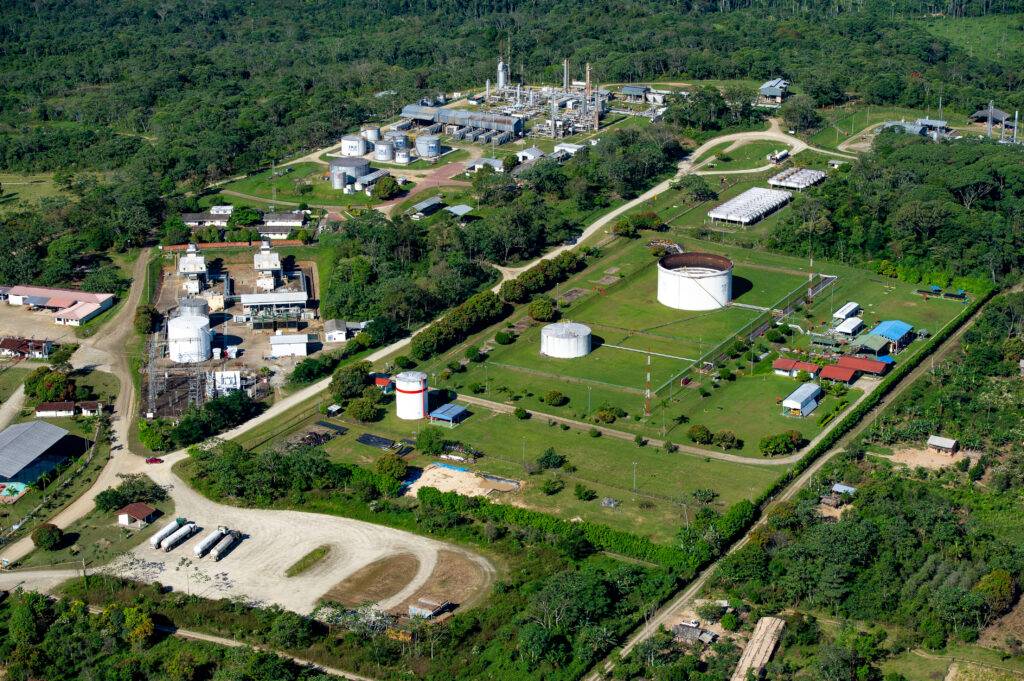
4. Bolivia quietly strengthened a critical piece of gas infrastructure
Amid the institutional headlines, YPFB Transporte announced a US$6.3 million reinforcement and extension of the aerial crossing carrying the Santa Cruz–Yacuiba Gas Pipeline over the Río Grande.
The project extended the bridge structure by 800 metres and added six towers after river erosion threatened the existing infrastructure.
The significance is greater than the size of the investment suggests.
The GSCY evacuates gas from San Alberto, San Antonio and Incahuasi and supports domestic supply, exports and feed to the Río Grande liquids-separation plant.
Why it matters
Revitalising Bolivia’s upstream does not end at the wellhead.
Existing infrastructure is one of the country’s principal competitive advantages compared with undeveloped frontier petroleum provinces.
Preserving that infrastructure therefore protects the economics of future incremental production.
This week’s investment is a good example of relatively unglamorous spending with high strategic value.
Confidence: HIGH
5. Institutional reform is now moving faster than hydrocarbons legislation
The contrast this week became sharper.
On 2 September, the Chamber of Deputies formally began technical consultation on the Government’s Investment Law, involving the Economy Ministry, private business organisations and Fundación Jubileo. The stated priorities include security of investment, clear rules and reducing political discretion.
Yet in the official Assembly and Hydrocarbons Ministry material reviewed through early this morning, I found no corresponding formal submission of the Government’s new Hydrocarbon Law.
That is increasingly striking because the Ministry said as far back as April that the proposed law would be sent to the Assembly “in the coming days.”
Implications
The reforms are becoming asynchronous:
- institutional restructuring — moving
- Investment Law — moving
- Hydrocarbon Law — still pending publicly
- possible constitutional reform — entering the political conversation
That is not necessarily a problem if the pieces eventually fit together.
But investors ultimately need to see the complete architecture.
Confidence: HIGH on the Investment Law’s progress; MEDIUM-HIGH that no Government Hydrocarbon Law submission had been publicly recorded in the official material reviewed by early 4 September.
What the week collectively means
Three months ago, the central question was:
Will Bolivia actually reform its petroleum sector?
The question is beginning to change.
It is now:
Can Bolivia make all the reforms coherent?
An investable upstream regime ultimately needs at least four pieces:
1. Competitive law and fiscal terms
Projects must generate internationally competitive risk-adjusted returns.
2. Investor protection and contractual certainty
Capital needs confidence that the rules applicable when a discovery is made will remain credible when production begins years later.
3. Capable institutions
A good law administered badly is still a bad investment environment.
4. Projects that can actually move
Bolivia ultimately needs drilling rigs, workovers, seismic crews and capital — not simply reform documents.
This week mainly addressed No. 3.
That is meaningful progress.
But Bolivia has not yet completed Nos. 1, 2 or 4.
The week’s strategic signal
I would therefore describe this as a constructively disruptive week.
The interventions of YPFB and ANH create execution risk in the short term.
But simply leaving the existing institutional structure untouched while writing a new Hydrocarbon Law would probably have been insufficient.
The Government appears increasingly to recognise that the problem is systemic:
law + regulator + national oil company + private capital + execution.
That diagnosis is stronger than treating production decline merely as a shortage of exploration spending.
The challenge now is implementation.
What to watch next week
The highest-value signals are now quite specific:
1. YPFB’s future upstream mandate
Whether the Government provides more detail about YPFB’s future upstream mandate and precisely which activities it wants private companies to assume.
2. Continuity during the interventions
Whether YPFB and ANH establish procedures ensuring that exploration, development, licensing and contractual approvals continue normally during the interventions.
3. Formal submission of the new Hydrocarbon Law
This remains one of the clearest signals to watch. Formal submission would move one of the central components of Bolivia’s proposed upstream reform from policy discussion into the legislative process.
4. Movement on projects already in the pipeline
Particularly Iñiguazú, Okinawa, Vitiacua and other projects requiring contractual or legislative progression.
5. Foreign-company behaviour
Speeches matter less now than evidence of companies entering data rooms, negotiating acreage, signing farm-ins, committing technical teams or allocating capital.
I found no material new official announcement this week of a major farm-in, foreign upstream investment, discovery or exploration award, and I would not manufacture one simply to fill the report.
Resumen en español
Esta semana Bolivia inició una reforma institucional importante con las intervenciones de YPFB y la ANH, mientras el Gobierno plantea reenfocar YPFB hacia exploración, producción y refinación.
El desafío ahora será coordinar esa transformación con una nueva Ley de Hidrocarburos competitiva, seguridad jurídica y mecanismos que permitan convertir oportunidades en inversión y producción.
The question for the industry
If Bolivia could change only one thing first — fiscal terms, contractual security, YPFB, regulation or approval times — which change would unlock the most upstream capital?
Bolivia Hydrocarbons Intelligence is an independent intelligence and analysis publication from Colin Dunlop Consulting, focused on the developments shaping Bolivia’s hydrocarbons sector, investment environment and upstream opportunities.
Colin Dunlop | Petroleum Engineer & Project Manager | Santa Cruz, Bolivia
Sources
- YPFB — Intervention and future role of YPFB, 2 September 2026
- YPFB — YPFB Transporte invests US$6.3 million in Río Grande aerial crossing, 3 September 2026
- Cámara de Diputados — Comisión de Planificación inicia la socialización del proyecto de Ley de Inversiones, 2 September 2026
- Cámara de Diputados — Proyecto de Ley Nº 684/2025–2026, Ley de Inversiones
- YPFB — Nueva Ley de Hidrocarburos impulsará a YPFB hacia su rol productivo y la recuperación del sector energético, 29 April 2026
- Ministerio de Hidrocarburos y Energías — Gobierno interviene de forma extraordinaria la Agencia Nacional de Hidrocarburos (ANH), 3 September 2026