
Weekly Strategic Review | Issue #002 | 11 September 2026
Bolivia’s hydrocarbons reform is starting to take shape — now private capital must follow
This was a substantive week for Bolivia’s hydrocarbons reform, not because of one transformational announcement, but because several pieces of the reform agenda began moving at the same time.
For the first time in the current reform cycle, a comprehensive proposal to reform Law 3058 is formally before Congress.
The Government introduced a market-pricing mechanism into part of the hydrocarbons chain.
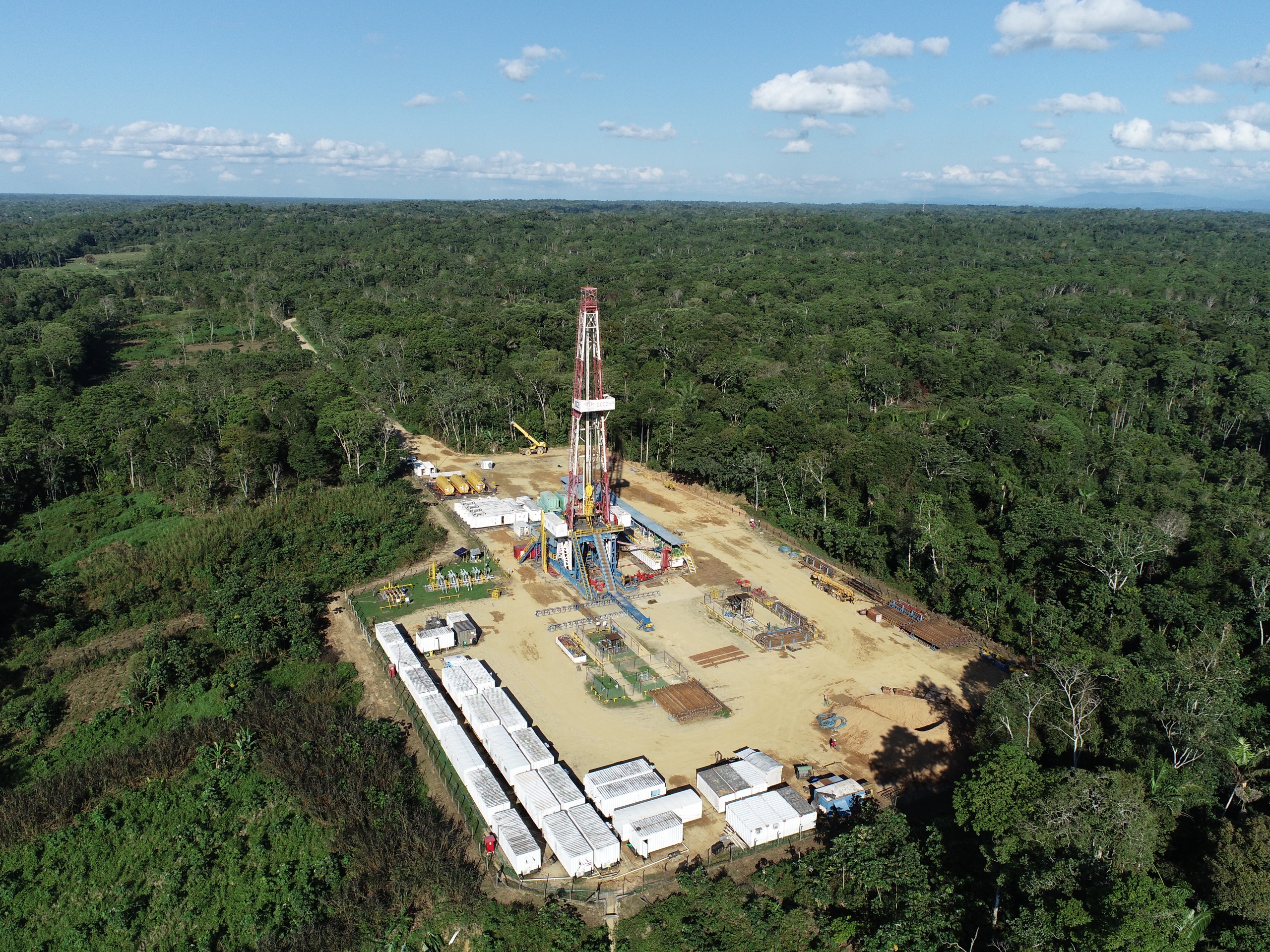
YPFB prepared to drill a US$9 million development well at Surubí.
And the intervention of the Agencia Nacional de Hidrocarburos (ANH) began moving from diagnosis towards institutional redesign.
Individually, none of these developments changes Bolivia’s upstream trajectory.
Collectively, they suggest something more important.
CDC Assessment: Bolivia is beginning to assemble the components of an investable upstream system. The decisive test will be whether clearer rules, better economics and institutional reform now translate into private capital entering projects.
1. Comprehensive reform of Law 3058 is now formally inside Congress
The most strategically important development of the week occurred in the legislative arena.
The Chamber of Deputies now formally lists PL 756/2025-2026, “Ley de Reforma Integral de la Ley N° 3058 de Hidrocarburos,” as a bill under treatment. The proposal was submitted by Deputy Estefanía Jiménez Morales at the beginning of September.
Its significance extends beyond the fact that another bill has entered Congress.
The proposal’s own diagnosis recognises one of Bolivia’s fundamental upstream problems: the hydrocarbons framework established in 2005 was designed for a very different petroleum environment.
Bolivia then possessed abundant conventional gas resources, relatively low development costs and strong international interest in its upstream sector.
Twenty-one years later, the challenge is different.
Production has declined. Mature fields require additional investment. Exploration must address increasingly complex and higher-risk opportunities. Bolivia must compete internationally for upstream risk capital.
PL 756 argues that the existing framework lacks the legal, fiscal and technical instruments required for higher-risk exploration and unconventional hydrocarbons and calls for a more competitive framework capable of attracting investment.
That represents an important shift.
Until recently, much of the debate centred on Government statements about a future Hydrocarbon Law.
There is now an actual comprehensive legislative text that can be analysed and debated.
There is, however, an important caveat.
PL 756 has not been formally identified by President Rodrigo Paz’s Executive as its own long-promised Hydrocarbon Law.
That distinction matters.
Bolivia will gain little if Congress, the Executive and industry ultimately spend months debating competing reform texts.
The best outcome would be for PL 756 either to become a credible legislative vehicle around which Government and industry can converge, or to accelerate submission of the Executive’s definitive proposal.
For investors, the question is increasingly moving from:
Will Bolivia reform Law 3058?
to:
What will the new fiscal and contractual framework actually look like — and when will investors be able to model projects against it?
2. DS 5701 introduces market economics into the hydrocarbons chain
On 7 September, the Government approved Supreme Decree 5701.
The decree allows refineries to import crude oil, process it domestically and sell the resulting products directly at market prices without State subsidy. It also establishes an IEHD of Bs 0.00/litre until 31 December 2030 for the relevant products.
The Government plans initially to import approximately 10,000 barrels per day, increasing to 20,000 barrels per day in the second year.
The underlying problem is straightforward.
Bolivia possesses substantial installed refining capacity that is underutilised because domestic crude production is insufficient.
The country’s principal refineries are currently processing approximately 24,000 barrels per day against around 63,750 barrels per day of design capacity.
Government projections indicate that the measure could increase domestic gasoline supply from approximately 27% to 40% of demand during the first year, while diesel would increase from approximately 5% to 8%.
At first sight, DS 5701 is a downstream measure.
Its strategic significance goes further.
The Government has demonstrated that it is prepared to combine:
market pricing + fiscal relief + commercial flexibility
when existing economics are not producing the required investment or supply response.
That creates an important benchmark for upstream reform.
If Bolivia is prepared to establish attractive commercial conditions for an imported barrel of crude, it should ensure that an incremental barrel economically recoverable from a Bolivian field is not placed at a disadvantage.
There is little strategic sense in encouraging imported crude to utilise domestic refining capacity while leaving economically recoverable domestic oil underground because fiscal or contractual terms make its production unattractive.
Imported crude may be entirely rational as a short-term response to insufficient domestic supply.
But it reinforces the case for competitive economics for incremental domestic production, particularly from mature and marginal fields.
3. Surubí provides an operational test: a US$9 million development well
The week also produced a tangible upstream development.
YPFB announced on 8 September that it will invest approximately US$9 million in the Surubí Noroeste-6 (SRB NO-6) development well in Cochabamba.
The well will target the Yantata reservoir, with Lower Petaca as a secondary objective, and is planned to reach approximately 3,496 metres using the 2,000-hp YPFB-02 rig.
Crews have been mobilised and drilling is expected to begin shortly. The anticipated fluid is light crude of approximately 44°–46° API.
The significance of SRB NO-6 is not the size of the individual project.
One US$9 million development well will not reverse Bolivia’s liquids-production decline.
Its importance lies in what it represents.
This is not a frontier exploration concept. It is a development well within a known petroleum system, with many of the characteristics that make mature-field investment attractive:
- known reservoirs;
- existing production history;
- existing infrastructure;
- lower subsurface uncertainty than frontier exploration;
- and relatively modest individual capital requirements.
This is why mature-field rehabilitation deserves to become an important component of Bolivia’s upstream recovery strategy.
One well makes little difference nationally.
A commercially repeatable portfolio of dozens of wells, workovers, recompletions, sidetracks and production-optimisation projects potentially could make a material difference.
There is also an important connection between Surubí and DS 5701.
Bolivia is importing crude because domestic liquids production is insufficient.
At the same time, Bolivia is drilling a development well intended to recover additional domestic light oil.
The future fiscal and contractual regime needs to ensure those two policies are economically coherent.
4. ANH reform is moving from intervention towards institutional redesign
Legislation and project economics will not be sufficient by themselves.
Investors also require functioning institutions.
On 10 September, the Government reported that forensic work associated with the intervention of the Agencia Nacional de Hidrocarburos (ANH) had identified nine vulnerabilities in the agency’s information systems.
The B-SISA system has been modified, additional technical personnel have been incorporated and the Ministry says processing throughput is being increased from approximately 19 procedures per week to 30.
Minister Marcelo Blanco also indicated that a consultancy to reorganise the ANH should be contracted shortly.
Much of the immediate work concerns downstream fuel control.
The strategic issue is broader.
A future upstream investor needs an ANH capable of handling authorisations, technical approvals, measurement, transportation, commercialisation, licensing and enforcement efficiently and predictably.
A competitive Hydrocarbon Law administered through weak or unpredictable institutions will not create a competitive investment regime.
The quality of the proposed ANH restructuring therefore matters.
Success should not simply mean fewer personnel, different reporting lines or a new organisation chart.
It should mean faster, technically stronger and more predictable regulatory decision-making.
5. Bolivia does not have one hydrocarbons problem
Taken together, this week’s developments illustrate something fundamental.
Bolivia does not have one hydrocarbons problem.
It has several interconnected problems:
- the fiscal framework;
- the contractual framework;
- YPFB’s role;
- regulatory capacity;
- project execution;
- declining mature fields;
- insufficient exploration;
- and declining domestic liquids production.
There is therefore unlikely to be one reform capable of transforming the sector.
Reducing royalties alone will not fix ANH.
Restructuring YPFB alone will not make exploration prospects commercial.
A good Hydrocarbon Law alone will not rehabilitate mature fields.
And importing crude alone certainly will not restore Bolivia’s petroleum industry.
The reform becomes powerful only when the individual measures begin reinforcing one another.
Competitive economics encourage investment.
Clear contracts allow investors to quantify risk.
Efficient regulators reduce delays and uncertainty.
Mature-field incentives can generate relatively near-term production.
Exploration creates the possibility of replacing reserves and ultimately reversing decline.
And a commercially focused YPFB can become an effective partner in that process.
Together, these elements begin to form what Bolivia has been missing:
an investable upstream system.
6. The most important signal is still missing: private capital
Perhaps the most important development this week is the one that did not happen.
Despite increasingly tangible activity around legislation, pricing, drilling and institutional reform, there was no material public announcement during the week of:
- a major international farm-in;
- a significant foreign-operated acreage award;
- a material private mature-field investment;
- a new exploration licence involving substantial international capital;
- or a major upstream capital commitment from an international operator.
That distinction matters.
Governments can announce reforms.
Congress can pass laws.
Regulators can reorganise.
YPFB can drill wells.
But one of the clearest external measures of whether Bolivia has created a genuinely competitive upstream environment will be whether investors begin committing people, rigs and dollars to Bolivian projects.
That is the next threshold.
The market needs to see:
- a Government-backed Hydrocarbon Law;
- fiscal terms that investors can model competitively;
- clear and bankable contractual structures;
- fast and predictable approvals;
- competitive mature-field economics;
and finally—
private risk capital entering projects.
When that begins happening at material scale, Bolivia will have moved beyond reform announcements and into genuine upstream recovery.
What to watch next
1. The Executive position on PL 756.
Does President Rodrigo Paz’s Government adopt the congressional proposal as a legislative vehicle, seek substantial amendments, or introduce a separate Hydrocarbon Law?
2. DS 5701 implementation.
The implementing regulations will determine how workable the new imported-crude and market-priced refining model actually becomes. The commercial detail will be more important than the headline.
3. SRB NO-6.
Mobilisation now needs to become execution. Confirmation that the well has spudded will be the next milestone, followed by the drilling result and tested production rate.
4. Domo Oso X-3.
The widely discussed 2.8 TCF remains prospective potential, not certified reserves. The project remains an important test of Bolivia’s ability to move a strategically important exploration well through environmental, regulatory and judicial processes.
5. Foreign operator and private-capital activity.
This may become the most important indicator of all. The arrival of credible operators and material investment capital would provide much stronger evidence that international perceptions of Bolivia are changing than another policy announcement.
CDC Perspective
The most encouraging aspect of this week is that Bolivia’s hydrocarbons reform is becoming less abstract.
As discussed in Issue #001, the reform process initially became visible through institutional restructuring.
a new Hydrocarbon Law;
a restructured YPFB;
more private investment;
higher production.
This week produced tangible manifestations of several of those objectives.
An actual comprehensive Law 3058 reform is in Congress.
The Government has demonstrated a willingness to use market pricing and fiscal relief within the hydrocarbons chain.
A rig and crews are preparing to drill a US$9 million development well.
ANH restructuring is moving towards systems remediation and institutional redesign.
That is progress.
But the next stage is where credibility will be won or lost.
Bolivia’s objective should not simply be to produce a new law, another decree or another institutional restructuring.
It should be to create an environment in which technically sound projects can attract capital, obtain approvals, be executed efficiently and generate competitive returns.
The architecture of that system is beginning to appear.
The next question is whether investors will believe in it strongly enough to commit capital.
Resumen Ejecutivo
Bolivia avanzó esta semana en cuatro frentes importantes para la recuperación de su sector de hidrocarburos: legislación, condiciones económicas, actividad operativa y reforma institucional.
Por primera vez en el actual ciclo de reformas, una propuesta integral para modificar la Ley 3058 —el PL 756/2025-2026— se encuentra formalmente en tratamiento en la Cámara de Diputados. Sin embargo, todavía no está claro si el Gobierno del presidente Rodrigo Paz adoptará este proyecto como su principal vehículo legislativo, buscará modificarlo o presentará su propia propuesta.
Al mismo tiempo, el DS 5701 introdujo precios de mercado para productos refinados a partir de crudo importado y estableció un IEHD de Bs 0,00/litro para los productos correspondientes hasta finales de 2030. Aunque se trata principalmente de una medida downstream, demuestra que el Gobierno está dispuesto a utilizar precios de mercado, alivio fiscal y flexibilidad comercial cuando las condiciones existentes no generan la respuesta económica necesaria.
En upstream, YPFB anunció una inversión de aproximadamente US$9 millones para perforar el pozo de desarrollo Surubí Noroeste-6, mientras que la intervención de la ANH comenzó a traducirse en cambios concretos en sistemas, capacidad técnica y planes de reorganización institucional.
El progreso es real.
Pero todavía falta la señal más importante:
capital privado de riesgo entrando efectivamente en proyectos upstream bolivianos.
Bolivia parece estar comenzando a construir los componentes de un sistema de inversión más competitivo para hidrocarburos.
El próximo paso será demostrar que ese sistema es suficientemente atractivo, predecible y estable para que inversionistas y operadores vuelvan a comprometer capital en el país.
Bolivia Hydrocarbons Intelligence is an independent intelligence and analysis publication from Colin Dunlop Consulting, focused on the developments shaping Bolivia’s hydrocarbons sector, investment environment and upstream opportunities.
Colin Dunlop | Petroleum Engineer & Project Manager | Santa Cruz, Bolivia
Sources
- Cámara de Diputados — Proyecto de Ley N° 756/2025–2026, Reforma Integral de la Ley N° 3058 de Hidrocarburos
- Ministerio de Hidrocarburos y Energías — Presidente firma D.S. 5701 para permitir el abastecimiento de combustibles y fortalecer la refinación, 7–8 September 2026
- YPFB — YPFB invierte USD 9 millones en la perforación del pozo petrolero SRB NO-6, 8 September 2026
- Ministerio de Hidrocarburos y Energías — Intervención detectó 9 vulnerabilidades en sistemas informáticos de la ANH, 10 September 2026